Strong Bones for Life: The Role of Calcium, Vitamin D3 and Vitamin K2
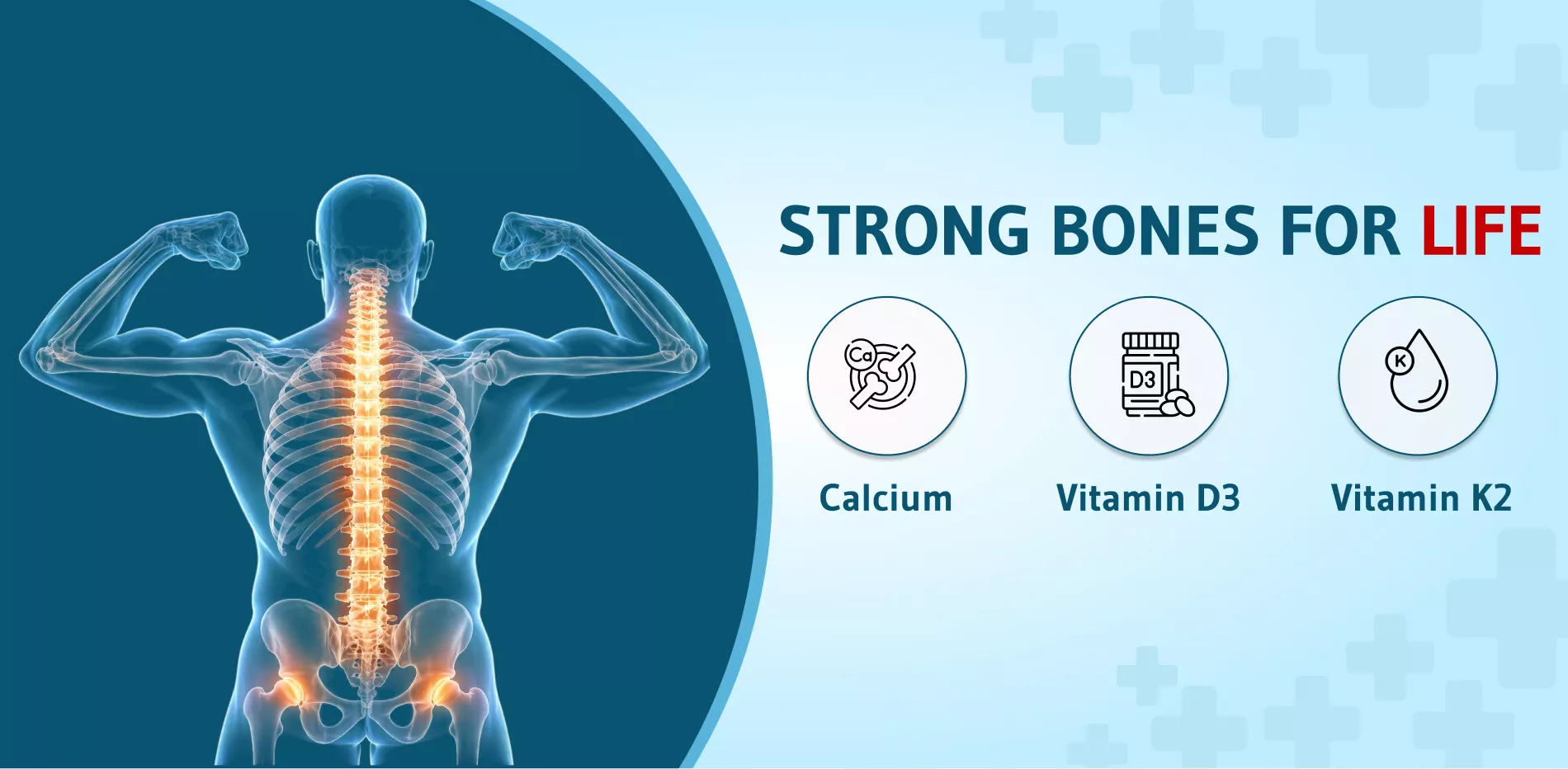
Table of Contents
Bone health is one of the most important pillars of long-term wellbeing, yet it is often ignored until a problem appears. Many people only begin thinking seriously about their bones after they experience joint discomfort, reduced mobility, a fracture, or a diagnosis related to low bone density. In reality, strong bones are built and maintained over a lifetime. Bone health is not only about avoiding fractures in old age. It is also about staying active, independent, and physically confident throughout adulthood and later life.
Bones are living tissues that are constantly changing. They are not hard, lifeless structures that stay the same forever. Throughout life, the body continuously breaks down old bone tissue and replaces it with new bone. This process helps maintain strength and structure. In younger years, bone formation tends to happen faster than bone breakdown, which is why bone mass increases as the body grows. However, as people age, this balance begins to shift. Bone breakdown can gradually outpace bone formation, leading to weaker and more fragile bones over time.
This silent reduction in bone strength can continue for years without any obvious symptoms. A person may feel healthy and active while bone density is slowly declining in the background. That is why conditions such as osteoporosis are often called silent diseases. The first sign may come only after a minor fall causes a fracture or when back pain, posture changes, or loss of height begin to appear. By that stage, bone weakness may already be significant. This is why prevention and early support are so important.
Among the nutrients most closely linked with strong bones are calcium, vitamin D3, and vitamin K2. These three are widely recognized for their complementary roles in bone support. Calcium is the mineral that gives bones much of their structure and strength. Vitamin D3 helps the body absorb calcium more effectively. Vitamin K2 helps direct calcium into bones, where it can be used properly. Together, they form a smarter and more complete approach to bone support than calcium alone.
A growing number of adults and elderly individuals are at risk of poor bone health because of modern lifestyle factors. Low physical activity, poor diet, limited sunlight exposure, aging, hormonal changes, and chronic health conditions can all affect bone strength. As life expectancy increases around the world, osteoporosis and bone-related weakness are becoming more important public health concerns. The encouraging part is that good nutritional support and healthy habits can play a major role in protecting bones at every stage of life.
Understanding Bone Health Across Life
Bone development begins early in life and continues actively through childhood, adolescence, and young adulthood. During these years, the body builds bone mass rapidly. Peak bone mass is usually reached in early adulthood. This peak is important because it creates the foundation for bone strength later in life. The stronger the bones are at their peak, the more reserve the body may have as age-related loss begins.
After early adulthood, the focus shifts from building bone to maintaining it. Bone remodeling still continues, but the balance may slowly become less favorable. In middle age and older age, various factors can speed up bone loss. These include low calcium intake, lack of vitamin D, reduced exercise, smoking, excessive alcohol intake, poor overall nutrition, certain medications, and hormonal changes such as menopause.
Bone health is not equally affected in all people. Some groups are at greater risk. Women after menopause are more likely to experience rapid bone loss because estrogen levels decline, and estrogen plays an important role in protecting bone mass. Elderly individuals are also vulnerable because aging affects nutrient absorption, appetite, activity levels, and the body’s ability to produce vitamin D from sunlight. Men are not exempt either. Although osteoporosis is often discussed more in relation to women, many older men also face significant risk of low bone density and fractures.
Osteoporosis Risk and Why It Matters
Osteoporosis is a condition in which bones become thinner, weaker, and more likely to fracture. It is one of the most important bone health concerns in older adults. Fragile bones can break more easily, even with relatively minor falls or impacts. Common fracture sites include the spine, hip, and wrist. These fractures are not minor problems, especially in elderly individuals. They can affect mobility, independence, and quality of life for months or even years.
The risk of osteoporosis increases with age, but age is not the only factor. Family history, low body weight, poor nutrition, smoking, inactivity, long-term use of certain medications, and certain chronic illnesses can also increase the likelihood of bone loss. In women, postmenopausal bone loss is especially important because hormonal changes can accelerate the breakdown of bone tissue.
The real concern with osteoporosis is not just the diagnosis itself, but what it can lead to. A broken hip in an elderly person can lead to reduced independence, prolonged hospitalization, and difficulty returning to normal daily activities. Spinal fractures may cause chronic pain, posture changes, and reduced height. Even wrist fractures can reduce confidence and function. Strong bones support more than the skeleton. They support freedom of movement, healthy aging, and self-reliance.
The Role of Calcium in Bone Strength
Calcium is the most widely known mineral associated with bone health. It is one of the main building blocks of bones and teeth. Most of the body’s calcium is stored in the skeleton, where it helps provide hardness and structural strength. Without enough calcium, the body cannot maintain normal bone health properly.
The body also needs calcium for other vital functions, including muscle contraction, nerve signaling, and heart rhythm. If dietary calcium intake is too low, the body may start taking calcium from the bones to support these essential functions. Over time, this can weaken the bones and reduce bone density.
Adequate calcium intake is therefore necessary throughout life. In children and teenagers, calcium supports bone growth and development. In adults, it helps maintain existing bone mass. In older people, it becomes especially important because natural bone loss has already begun. However, while calcium is essential, it does not act alone. This is where many people go wrong. Taking calcium without ensuring proper absorption and utilization may not be enough to support bone health effectively.
Why Vitamin D3 Is So Important
Vitamin D3 plays a critical role in helping the body absorb calcium from the digestive tract. Without sufficient vitamin D3, the body may struggle to absorb enough calcium, even if dietary intake appears adequate. This means the body may not be able to use calcium efficiently to support bones.
Vitamin D3 also helps regulate calcium and phosphorus balance in the body, both of which are important for bone mineralization. Good vitamin D3 status supports bone density, muscle function, and overall skeletal health. Low vitamin D levels are associated with weak bones, poor mineralization, and a greater risk of falls and fractures, especially in older adults.
One challenge with vitamin D3 is that deficiency is common. Many people spend long hours indoors, use sun protection regularly, or live in regions where sunlight exposure is limited for much of the year. Older adults are particularly vulnerable because aging skin produces less vitamin D from sunlight than younger skin. Reduced outdoor activity can make this even worse. This is why vitamin D3 has become such an important part of bone support discussions, especially for adults and elderly populations.
The Often Overlooked Role of Vitamin K2
Vitamin K2 is less famous than calcium and vitamin D3, but it is an increasingly important nutrient in modern bone health conversations. Its key role is helping activate proteins that regulate where calcium goes in the body. In simple terms, vitamin K2 helps direct calcium toward the bones and teeth, where it can be properly used.
This role matters because it is not enough for calcium to enter the body. It also needs to be guided effectively into bone tissue. Vitamin K2 supports this process as part of normal bone mineralization. This is why calcium, vitamin D3, and vitamin K2 are often discussed together. Their roles are different, but they work in a connected and complementary way.
When combined thoughtfully, these nutrients support a more complete approach to bone health. Calcium provides the raw mineral material. Vitamin D3 improves calcium absorption. Vitamin K2 supports the proper use of that calcium in bone tissue. This combination is especially relevant for adults and elderly individuals who need practical, efficient nutritional support.
Bone Health in Adults
Many adults assume that bone health becomes important only after the age of sixty. That is a mistake. Bone support in adulthood is essential because this is the period when the body is working to preserve the bone mass built earlier in life. Small losses over time may not be noticeable, but they can add up over the decades.
Adults with busy lifestyles may not always get enough calcium-rich foods or enough sunlight. Sedentary work routines, poor dietary habits, smoking, alcohol use, and irregular exercise can all weaken the body’s support systems for healthy bones. For women, the years leading up to menopause are a particularly important time to think ahead about bone care. For men, midlife is also a good stage to strengthen preventive habits before age-related bone loss becomes more significant.
Bone health in adults should focus on consistency. This means choosing a balanced diet, maintaining physical activity, ensuring good vitamin D status, and paying attention to calcium and vitamin K2 intake. Support started during adulthood can make a significant difference later in life.
Bone Health in the Elderly
Bone health becomes even more important in older age because several risk factors often come together. Appetite may decrease, digestion may become less efficient, muscle mass may decline, and mobility may be reduced. Sunlight exposure often falls as elderly people spend more time indoors. At the same time, the body becomes less efficient at making vitamin D from sunlight and less resilient when recovering from bone injuries.
This means elderly people need not only awareness, but also practical support. Bone-related fractures in older adults can have serious consequences. They may lead to long recovery periods, loss of independence, or increased dependence on family or caregivers. Maintaining bone strength in later life is therefore one of the most important parts of healthy aging.
Nutritional support for the elderly should be simple, reliable, and easy to follow consistently. Calcium, vitamin D3, and vitamin K2 can be especially relevant during this stage because the body needs both adequate intake and effective utilization. Combined with safe physical activity and fall prevention strategies, this nutritional support can help protect mobility and confidence.
Lifestyle Habits That Support Strong Bones
Nutrition is essential, but it is not the only factor in bone health. Lifestyle habits also matter greatly. Weight-bearing exercise is one of the best ways to support healthy bones. Activities such as walking, climbing stairs, resistance training, and light strength exercises help stimulate the bones and encourage maintenance of bone mass. Bones respond to movement and load. When the body remains inactive for long periods, bones receive fewer signals to stay strong.
Muscle health is also connected to bone health. Strong muscles improve posture, movement, and balance. Better balance reduces the risk of falls, which is especially important in elderly individuals. This means bone care should be seen as part of a bigger picture that includes movement, balance, and overall physical resilience.
A balanced diet also contributes beyond calcium alone. Protein, magnesium, phosphorus, and trace minerals all support the body’s ability to maintain healthy bones. Protein is especially important because bone contains a protein framework as well as minerals. Poor nutrition, low food intake, and highly restrictive diets may all reduce the body’s ability to maintain strong bones over time.
Smoking and excessive alcohol use should also be avoided because both are associated with poorer bone health. These habits can interfere with the body’s natural maintenance processes and increase fracture risk over time.
Why Combination Support Makes Sense
For many years, bone support conversations focused heavily on calcium alone. Today, there is greater awareness that calcium works best when supported by other nutrients. This is where the combination of calcium, vitamin D3, and vitamin K2 becomes especially valuable.
A person may consume calcium regularly, but if vitamin D3 is too low, absorption may be limited. Even with good calcium absorption, proper bone mineralization still depends on the body’s ability to use calcium efficiently. Vitamin K2 contributes to this process by supporting the activation of bone-related proteins. Together, this combination offers more complete nutritional support for people who want to protect bone strength proactively.
This is especially relevant in adults who are beginning to think about long-term bone care and in elderly individuals who need more structured support to maintain strength and mobility. Rather than focusing on one nutrient in isolation, a broader strategy often makes more practical sense.
Strong Bones for Healthy Aging
Strong bones are not only about preventing disease. They are about maintaining the ability to walk confidently, remain active, and enjoy daily life with fewer limitations. Healthy bones support posture, movement, independence, and quality of life. When bone health is neglected, the consequences can affect many aspects of life beyond the skeleton.
The concept of healthy aging includes bone health as a central theme. A person who protects bone strength is also investing in future mobility, balance, and resilience. This is why bone support should begin early, continue through adulthood, and remain a priority in later life.
Conclusion
Bone health is a lifelong priority, not something to think about only after a fracture or diagnosis. As people age, the balance between bone formation and bone loss shifts, increasing the risk of osteoporosis and fragile bones. Adults and elderly individuals are especially vulnerable when poor diet, low sunlight exposure, inactivity, or hormonal changes are involved.
Calcium remains essential because it provides the structural mineral foundation for bones. Vitamin D3 is critical because it helps the body absorb calcium effectively. Vitamin K2 adds another important layer of support by helping direct calcium into bone tissue where it is needed. Together, calcium, vitamin D3, and vitamin K2 offer a more complete and practical nutritional approach to bone health.
By combining the right nutrients with regular movement, balanced meals, and healthy habits, people can do much more to protect their bones over time. Strong bones support stronger lives, better mobility, and healthier aging. That is why bone care deserves attention not only in old age, but throughout life.